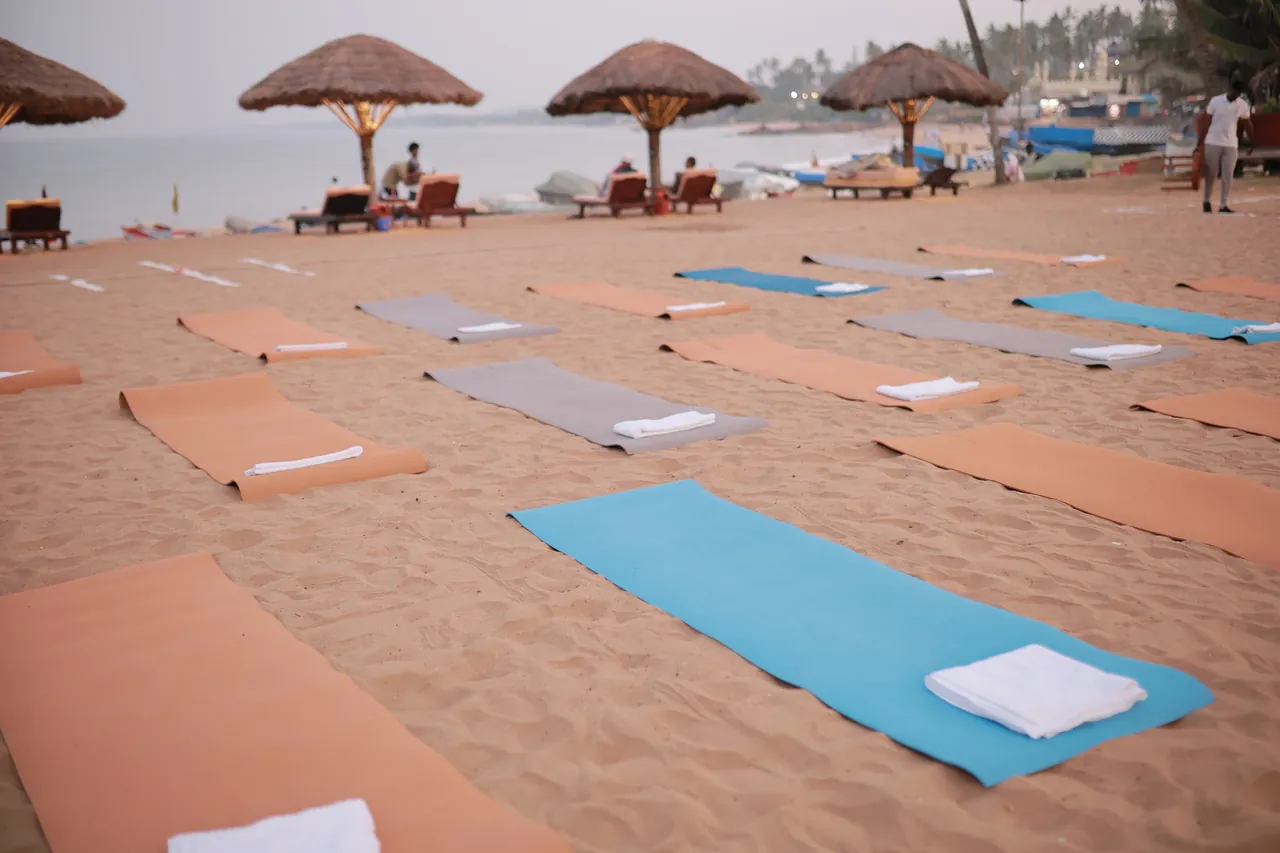
The school teaches from 5.30 in the morning until 7.30 at night, six days a week, and any of those hours will do. But if you ask which slot it recommends, the answer has not changed since 2014: the first one. The body is stiffer, the mind is quieter, and nothing has happened yet that you need to carry into the room.
That sentence holds most of the argument. Here is the rest of it.
The stomach is empty without trying
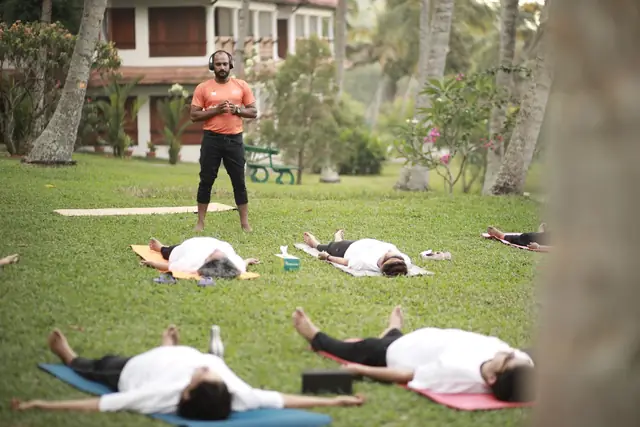
Yoga is practised on an empty stomach. The ordinary rule, here and almost everywhere else, is two hours after a meal, and it matters more than people expect once the class reaches forward bends and twists. A full stomach turns a twist into a negotiation.
At 5.30 am the rule keeps itself. You have not eaten since the night before, so there is nothing to plan around. At six in the evening, after a long lunch and a tea at four, it takes organising. The one posture that is happy after food is vajrasana, which is a useful thing to know and a poor reason to practise in the evening.
The heat has not started
Kerala is warm and humid for most of the year, and by the middle of the morning the air in Kovalam is already working against you. Practising in that heat is not dangerous for most people, but it changes the class: more sweat, more water, less attention left over for the breath.
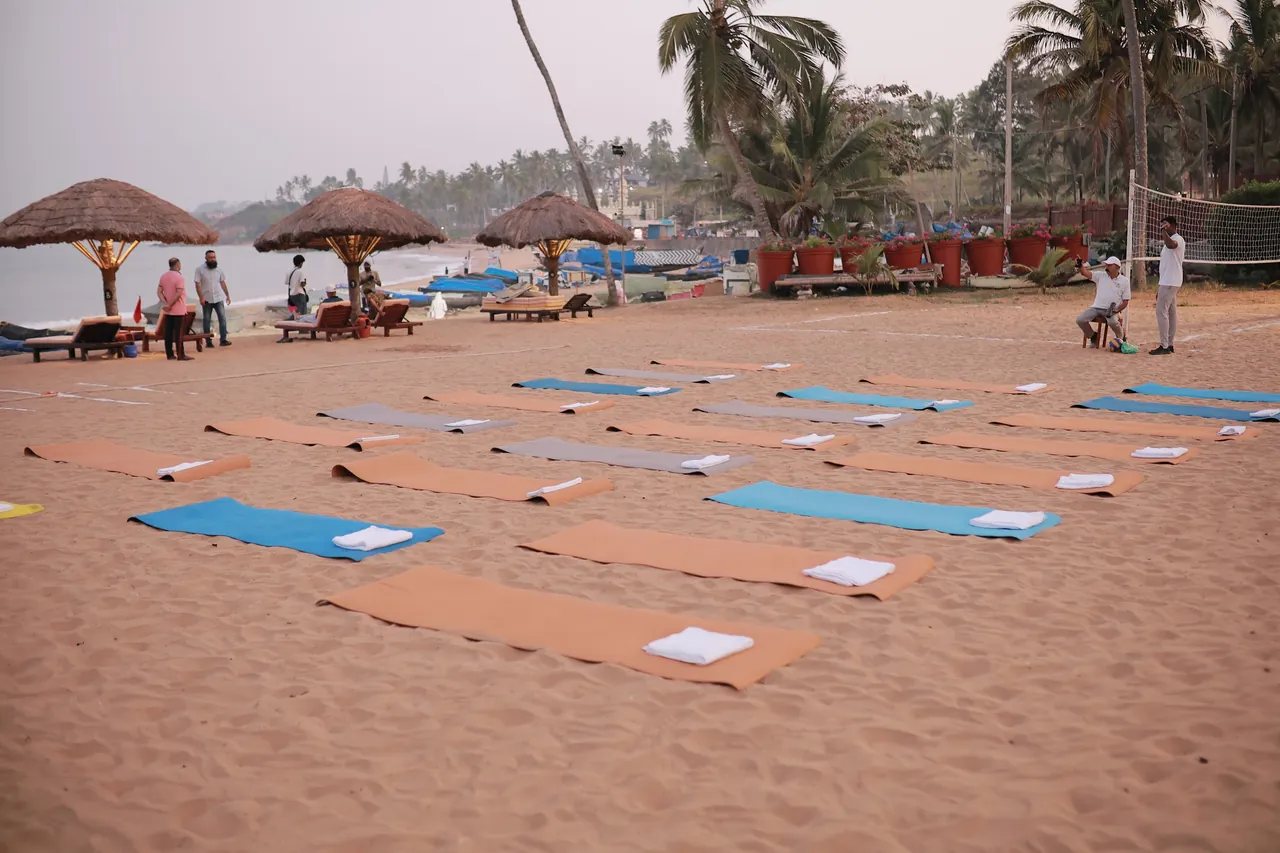
Before sunrise the air is as cool as it will be all day. The studio is open sided, so whatever breeze comes off the sea comes straight through. It is one reason the school's morning classes start before the heat does, and why the early batch is the one that fills first.
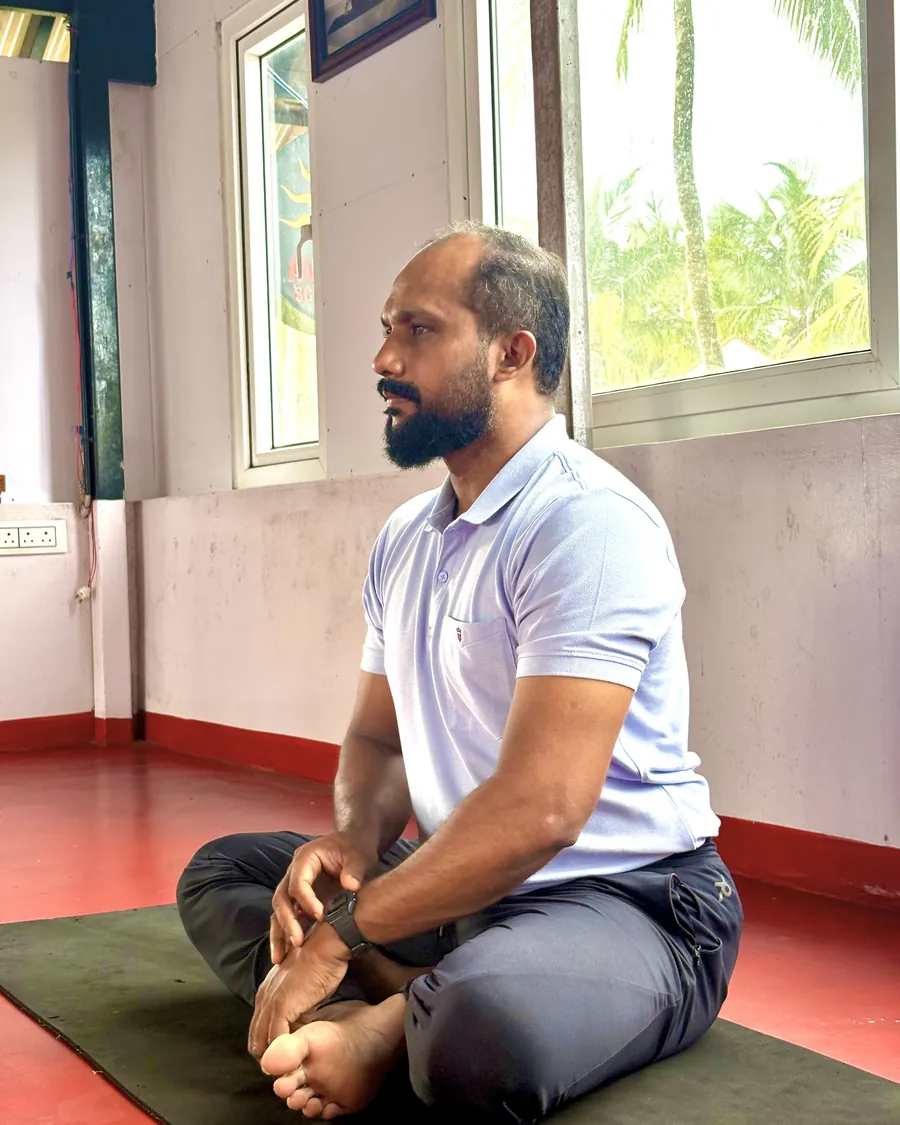
A stiff body is an honest one
People worry that they will be stiffer in the morning, and they are right. Muscles that have been still all night do not stretch as far at dawn as they do at dusk. This turns out to be useful. A morning practice shows you your real range, not the range you have after a day of walking around, and it makes you warm up properly instead of skipping straight to the postures you like.
It also means progress in the morning is progress. If a forward bend is easier at 5.45 am in March than it was in January, the change is real.
The mind has nothing to carry yet
Traditional yoga texts single out the early hours before sunrise, called brahma muhurta, as the best time for practice and meditation. You do not need to take the tradition on faith to see the point. At that hour there are no messages yet, no conversations to replay and no decisions waiting. The breathing work in particular goes deeper when there is nothing competing with it.
After a few weeks of it, a morning practice tends to stop feeling like something you fit into the day and start feeling like the thing the day is built on.
It survives a bad week
There is a quieter reason the school likes the first slot. An evening class competes with everything else the day produces: work running late, a family dinner, simple tiredness. A morning class only competes with sleep, and it wins that argument more often once it becomes a habit.
This is the idea behind Daily Yoga, the school's three month course for people who already practise: the same slot, the same sequence, every day, until it no longer needs deciding. Most people do not fail at yoga. They fail at doing it on a Tuesday in the rain when nobody is watching.
If mornings are impossible
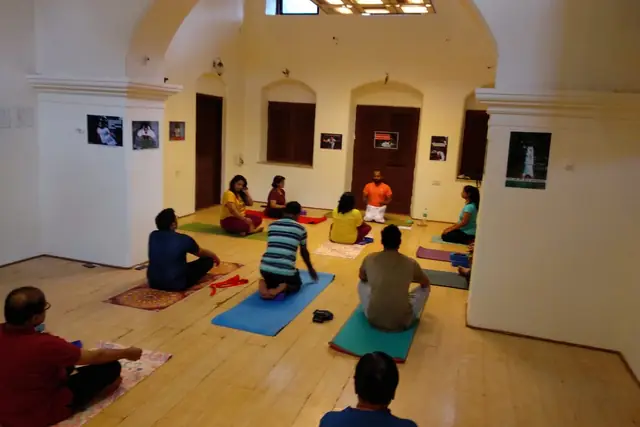
Some people work nights, some have small children, and some simply cannot function before seven. The school's later slots run through the day until 7.30 pm, and they are the same classes. An evening practice that happens beats a morning practice that does not.
If you practise in the evening, leave the two hours after food, keep the end of the class gentle, and expect it to be calmer and less energising than the morning. If you are not in Kerala at all, the live online class runs inside the same window: the early slots fall at breakfast time in East Asia, and the evening ones in the European afternoon.
Getting up for it
The first week is the hard one, and the alarm is not really the problem. Going to bed earlier is. Lay your clothes out the night before, leave the phone in another room, and do not check anything before you leave. By the second week most people find they wake a few minutes before the alarm.
If you are new to all of it, the school's basic course, Classical Hatha Yoga, runs in the early slots as well, and roughly half of each intake has never been on a mat. If you are in Kovalam on holiday, the visitor's guide explains how to book a first class.
Find the school
Avadhuta School of Yoga is at Vilasini Bhavan, on Kovalam Beach Road in Thiruvananthapuram, at the heart of Kovalam beach. Classes run Monday to Saturday between 5.30 am and 7.30 pm, and the same classes are taught live online. To book a first class, message +91 98951 02539 on WhatsApp and say where you are starting from.