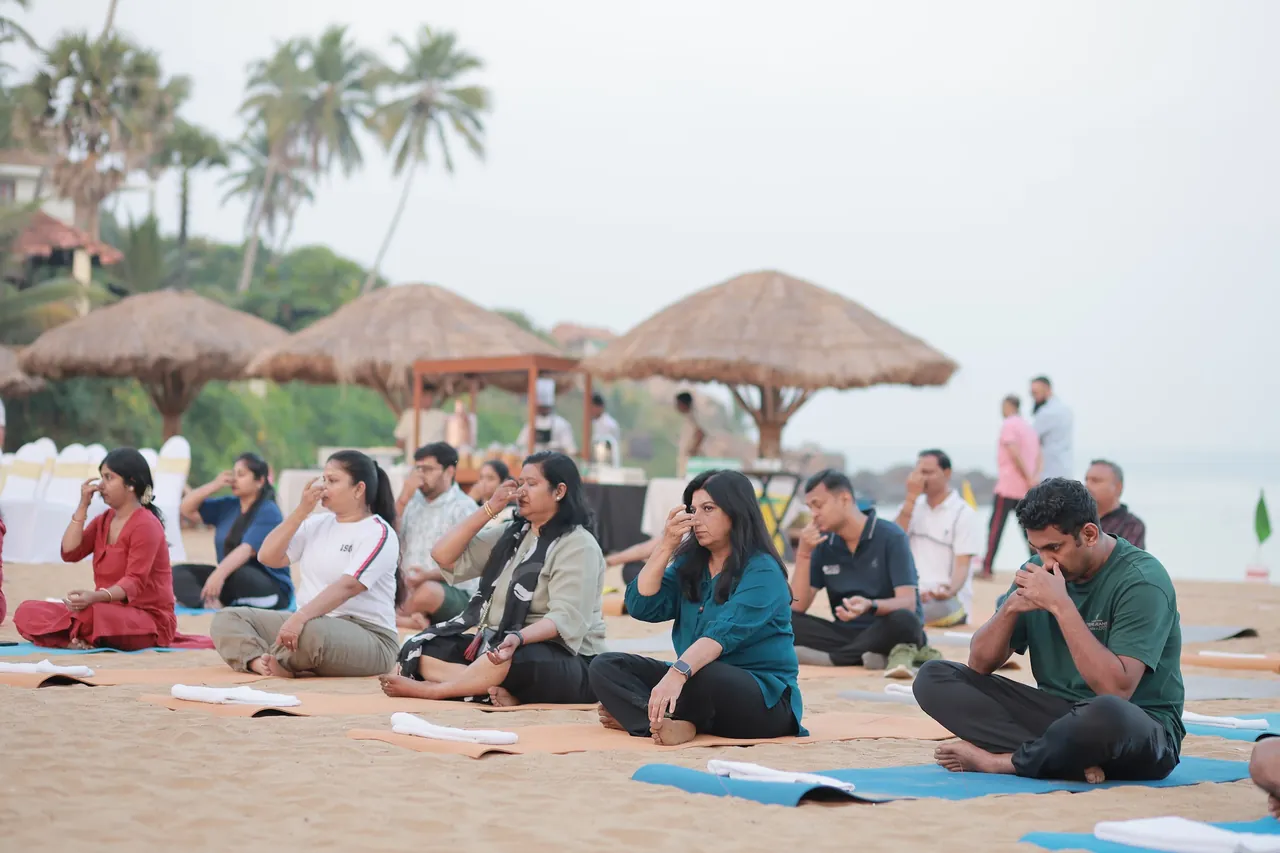
Pranayama, the work with the breath, is part of every class at Avadhuta. The Sivananda tradition the school trained in puts particular weight on it, and of all the breathing practices in the syllabus, nadi shodhana is the one people take home. It is simple enough to learn in a single class and deep enough to keep for life.
The name means cleansing of the channels. In north India the same practice, or one very close to it, is often called anulom vilom. Whatever you call it, the mechanics are the same: you breathe through one nostril at a time and swap sides in a steady rhythm.
Sitting for it
Sit in any position where your spine can stay upright without effort. Cross legged on a folded blanket works for most people. Vajrasana, kneeling and sitting back on the heels, works well if your knees allow it. A chair is fine too, with both feet flat on the floor and your back away from the backrest.
What matters is that the chest is open and the shoulders are soft. If you slump, the breath has nowhere to go. If you sit rigidly to attention, the shoulders creep up and the breath goes shallow. Settle somewhere between the two before you begin, and close your eyes.
The hand position
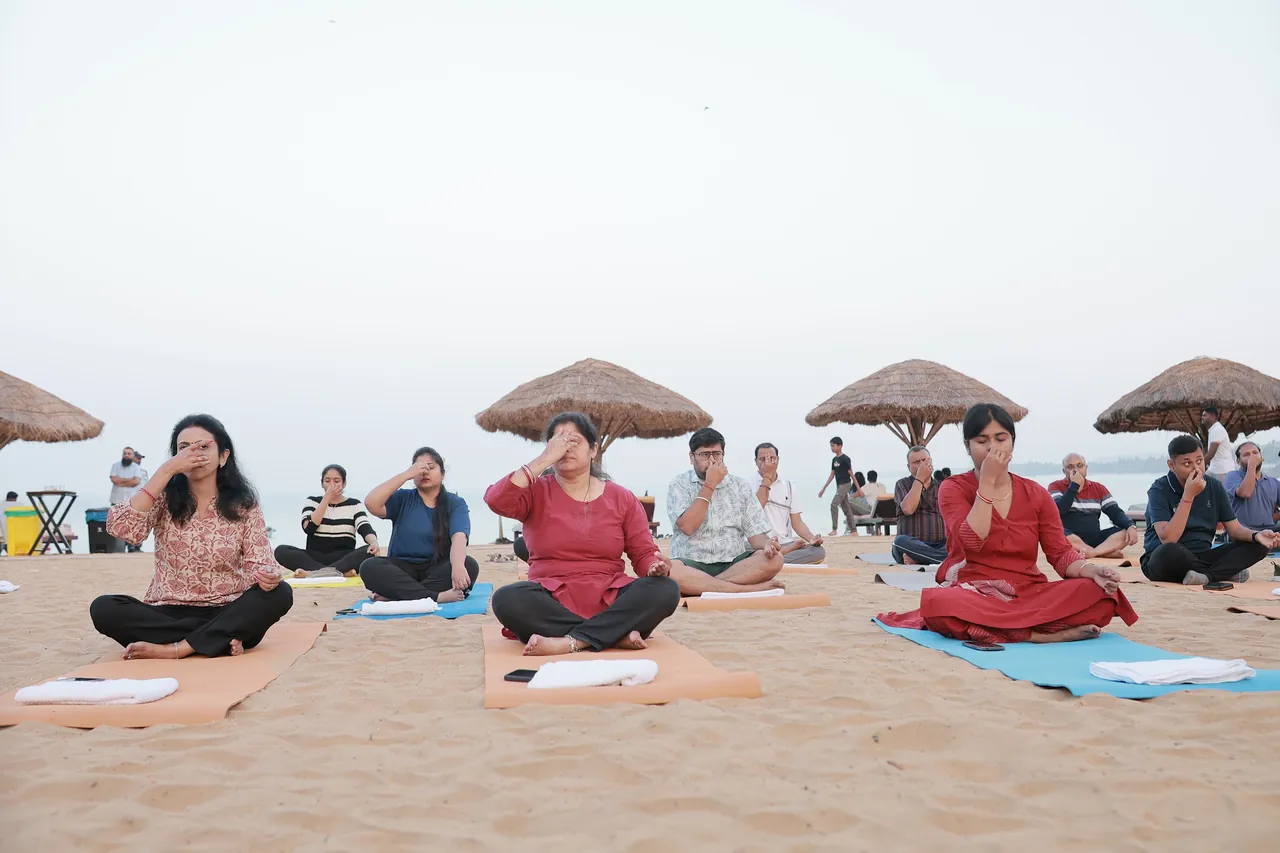
The right hand does the work. Fold the index and middle fingers down into the palm, so that the thumb, ring finger and little finger stay free. This is called vishnu mudra. The thumb will close the right nostril and the ring finger the left, each pressing gently on the soft side of the nose just below the bone.
The left hand rests on the left knee, palm up or down, whichever is comfortable. Let the right elbow drop towards the ribs rather than lifting out to the side, or the arm will tire within a minute.
One round, slowly
Begin by breathing out completely. Close the right nostril with your thumb and breathe in slowly through the left. Close the left nostril with your ring finger, release the thumb, and breathe out through the right. Breathe in through the right. Close it, open the left, and breathe out through the left. That is one round.
Keep the breath quiet. If you can hear it across the room, you are pulling too hard. The air should move smoothly and evenly, filling the belly first and then the chest, and the face should stay relaxed throughout. Students often frown, clench the jaw or press so hard that the tip of the nose moves. None of that helps.
The count
Start with an equal count: breathe in for four, out for four. Once that is comfortable, make the out breath longer than the in breath, four in and eight out. The longer exhale is where most of the calming effect comes from, and it is the version worth practising for weeks before you change anything else.
The classical form adds a pause with the breath held between the in breath and the out breath, traditionally in a ratio of one to four to two. Holding the breath is best learned with a teacher watching, and some people should not do it at all, so leave it out until someone has shown you in a class.
How long, and when
Five to ten rounds is a good beginning, which takes about five minutes. Build up to ten minutes over a few weeks. Practise on an empty stomach, which makes the early morning the natural time, though a few rounds before sleep also suit many people.
Regularity matters more than length. Five minutes every day does more than half an hour on Sundays.
What people notice
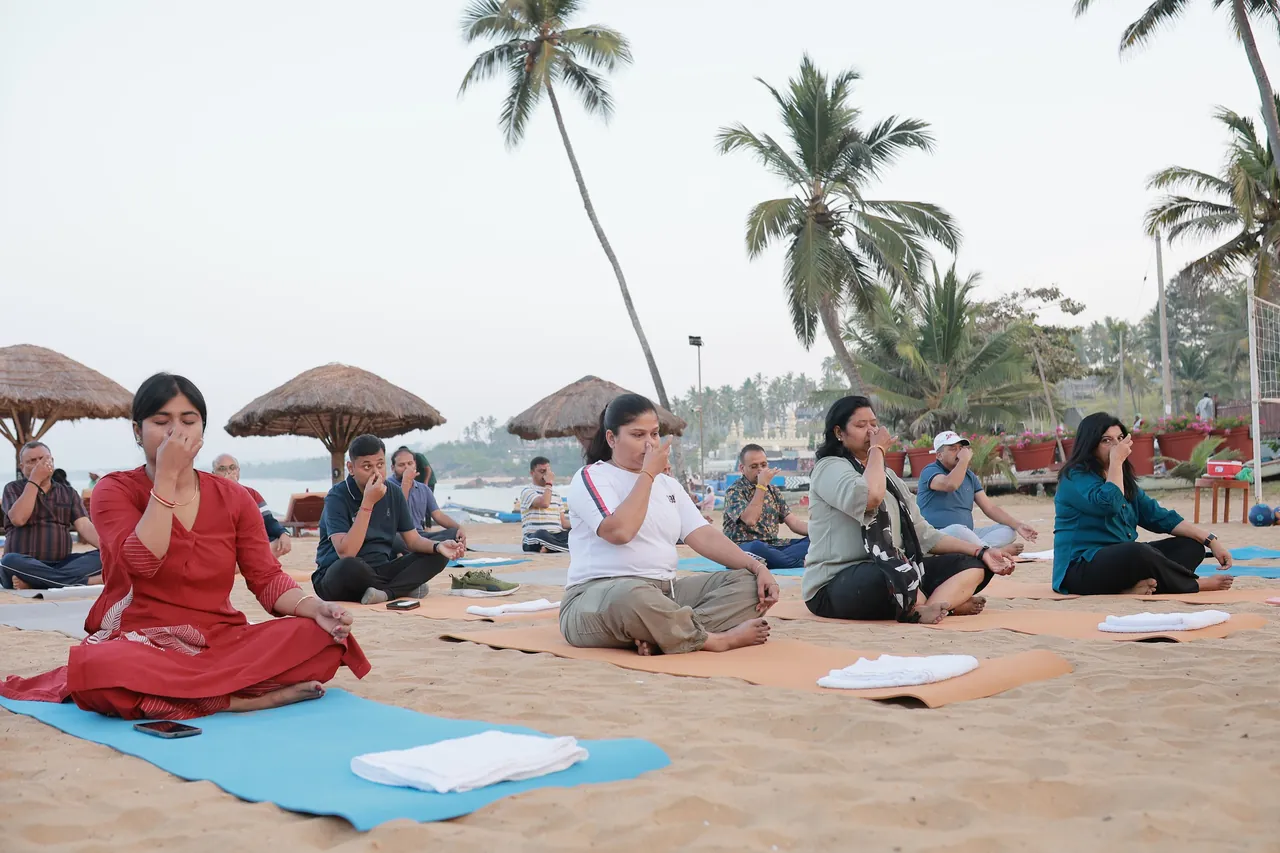
The usual report is a feeling of steadiness: the mind slows down to the pace of the breath, and the agitation of the day loosens. Many people use a few rounds before something that makes them nervous, or after a day that has wound them up. The school's own list of what a daily practice gives back puts inner peace and the bridge between body and mind at the centre, and you can read it on the why yoga page.
These are reports, not medical claims, and nadi shodhana is not a treatment for anything.
When to take it gently
If one nostril is blocked, do not force air through it. Breathe normally and try again another day. If you feel dizzy or lightheaded at any point, stop, open your eyes and let the breath return to normal on its own. That usually means the count was too long or the breath too forceful.
If you have high blood pressure, a heart condition, or are pregnant, keep to the gentle version without holding the breath, and speak to your doctor before going further. Tell your teacher too. That advice is the same for every breathing practice in yoga.
Learning it in a class
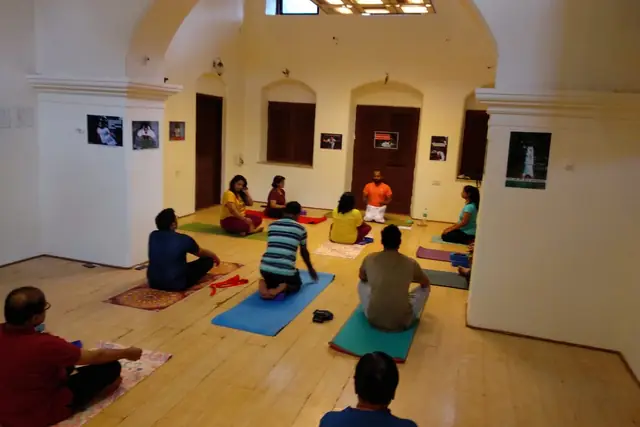
You can learn the steps from a page, but a teacher sees what you cannot: shoulders lifting with every in breath, the head tilting towards the hand, a count that is quietly too ambitious. In the school's Classical Hatha Yoga course, pranayama runs alongside the postures from the first week, because a posture held without the breath is only a shape. The same class is taught live online if you are not in Kerala.
Find the school
Avadhuta School of Yoga is at Vilasini Bhavan, on Kovalam Beach Road in Thiruvananthapuram, at the heart of Kovalam beach. Classes run Monday to Saturday between 5.30 am and 7.30 pm, and the same classes are taught live online. To book a first class, message +91 98951 02539 on WhatsApp and say where you are starting from.